Ancient Sea Creatures
The oceans, covering more than 70% of our planet, are home to some of the most ancient life forms still alive today. While dinosaurs once dominated the land, the seas have nurtured creatures whose lineages stretch back hundreds of millions of years, long before humans appeared. These remarkable survivors are living witnesses of Earth’s evolutionary history.
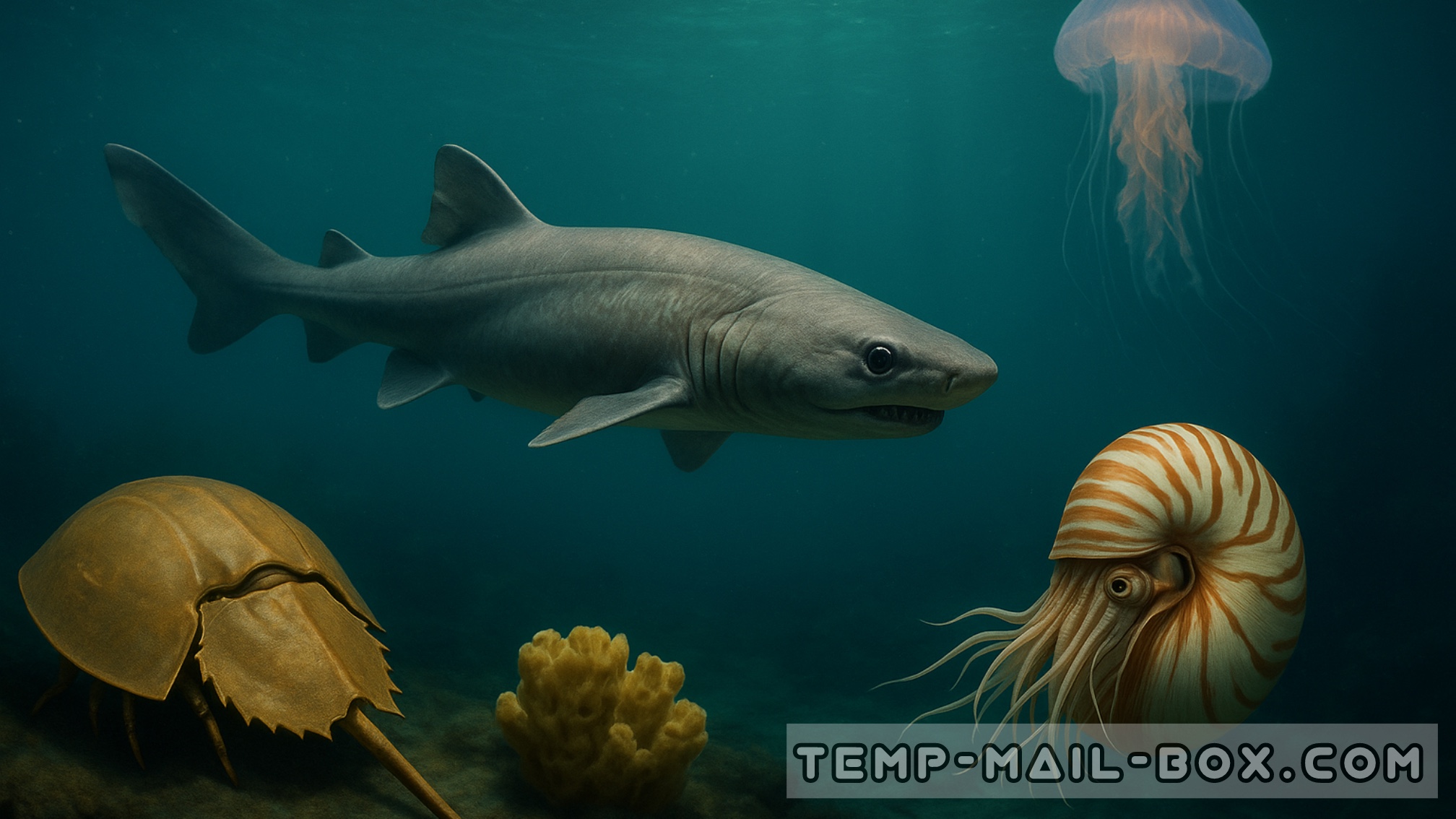
One of the oldest marine species is the horseshoe crab. Despite its name, it is not a crab but more closely related to spiders and scorpions. Horseshoe crabs have remained almost unchanged for over 450 million years, enduring mass extinctions and dramatic climate shifts.
Another living fossil is the nautilus, a mollusk with a spiral shell. Its ancestors roamed the seas 500 million years ago. The nautilus’ unique chambered shell allows it to control buoyancy, an adaptation that has stood the test of time.
Sharks, too, have ancient roots. The first primitive sharks appeared more than 400 million years ago. The frilled shark, with its eel-like body and rows of needle-sharp teeth, still resembles its prehistoric relatives.
Sea sponges might not look impressive, but they are among the oldest multicellular organisms, existing for at least 600 million years. They have no brains or organs, yet their simple body plan has kept them thriving in various marine environments.
Jellyfish are another timeless wonder, drifting through the oceans for over 500 million years. With no bones, brain, or heart, they rely on simple nerve nets to navigate and survive, proving that complexity is not always necessary for longevity.
These ancient sea creatures remind us that survival often comes from adaptability and stability rather than constant change. By studying them, scientists can better understand evolution, resilience, and the history of life on Earth.