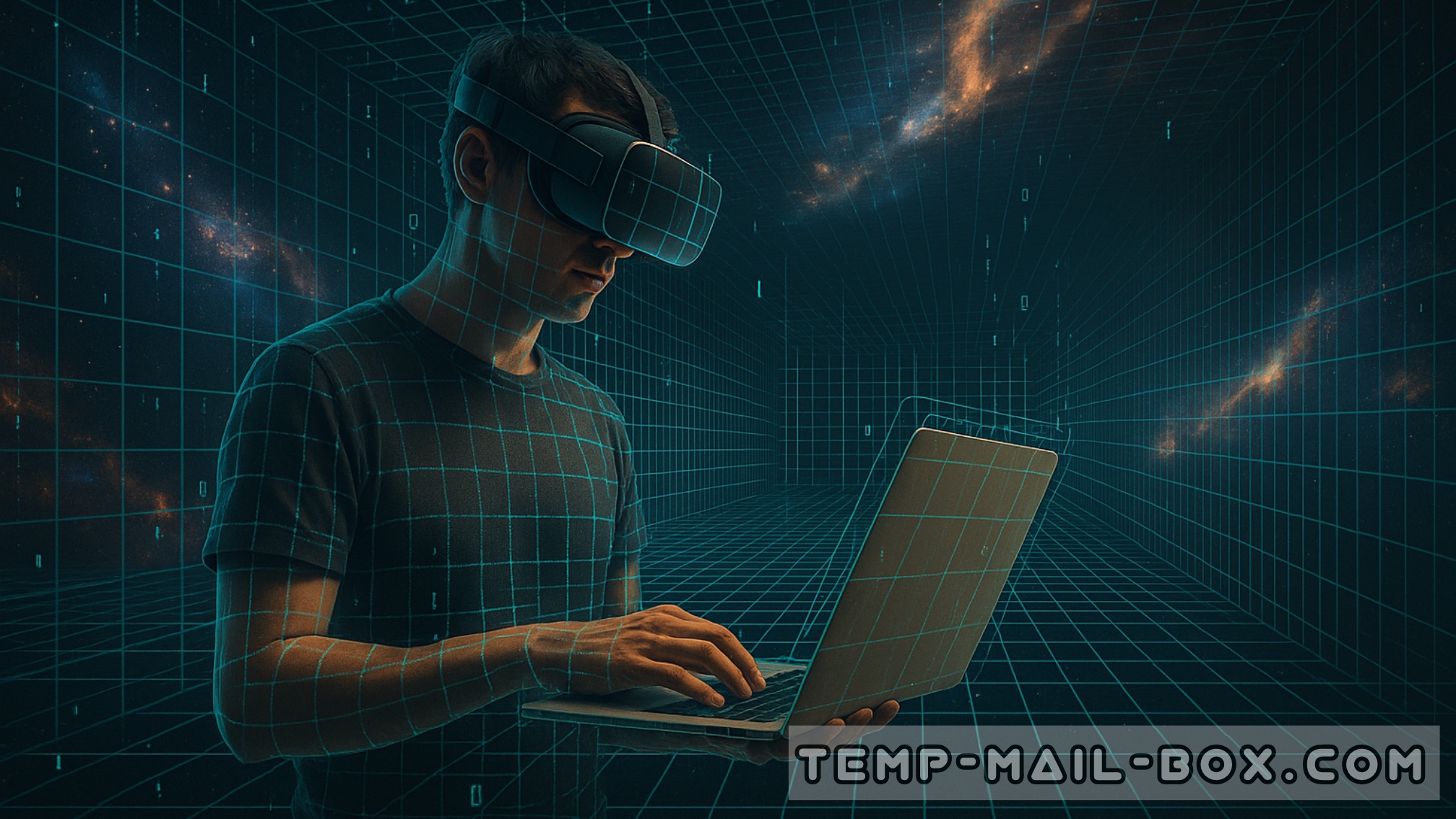
Are We Living in a Simulation? Exploring the Universe’s Greatest Hypothesis
The universe has long been a subject of wonder, awe, and speculation. But one idea has gained momentum in both scientific and philosophical communities: the simulation theory. This hypothesis suggests that everything we know — from galaxies and black holes to consciousness and memory — may be part of an advanced computer simulation created by a more developed civilization.
Origins of Simulation Theory
The simulation argument first gained widespread attention in 2003 thanks to Swedish philosopher Nick Bostrom. In his paper, he proposed that at least one of the following statements must be true:
Civilizations never reach a technological level where they can run realistic ancestor simulations.
Civilizations that do reach such a level choose not to run simulations.
We are almost certainly living in a simulation.
This third option caught the world’s attention. If it’s possible to create an artificial universe with conscious beings, and if such simulations are common, then it becomes statistically likely that we are not in the “base reality” but rather in one of countless simulations.
Scientific and Technological Clues
The advancement of virtual reality, quantum computing, and AI adds plausibility to the idea. Already, we are creating highly realistic simulations in video games and VR environments. Imagine this progress extrapolated over thousands of years — could our descendants simulate entire universes, complete with self-aware beings?
Physicists have also noted strange behaviors at the quantum level, such as particles behaving differently when observed, which some interpret as similar to rendering in a video game — where details are only generated when the player looks at them.
Moreover, the mathematical nature of the universe itself — its patterns, constants, and logic — hints at underlying code. As Elon Musk famously said, “There’s a one in billions chance we’re in base reality.”
Philosophical Implications
If the simulation theory is true, it radically alters how we see ourselves and our purpose. Are we the products of experimentation? Entertainment? Education?
Some draw comparisons to ancient ideas. In many religions and philosophies, reality is seen as an illusion — from Maya in Hinduism to Plato’s cave. Perhaps simulation theory is a modern scientific expression of this age-old intuition.
Counterarguments
Despite its intrigue, there are strong objections. Some critics argue it's unfalsifiable, meaning we can never prove or disprove it. Others claim it distracts from more grounded scientific inquiry. Without empirical evidence, it remains speculative — a philosophical exercise more than a scientific theory.
Why It Still Matters
Even if unproven, the simulation hypothesis opens profound conversations about consciousness, technology, and the nature of existence. It challenges us to question the very fabric of our perceived reality and reminds us how much we have yet to understand about the universe.
In the end, whether we live in a simulation or not, pondering the question can deepen our curiosity, drive technological progress, and perhaps even bring us closer to understanding what it means to be real.