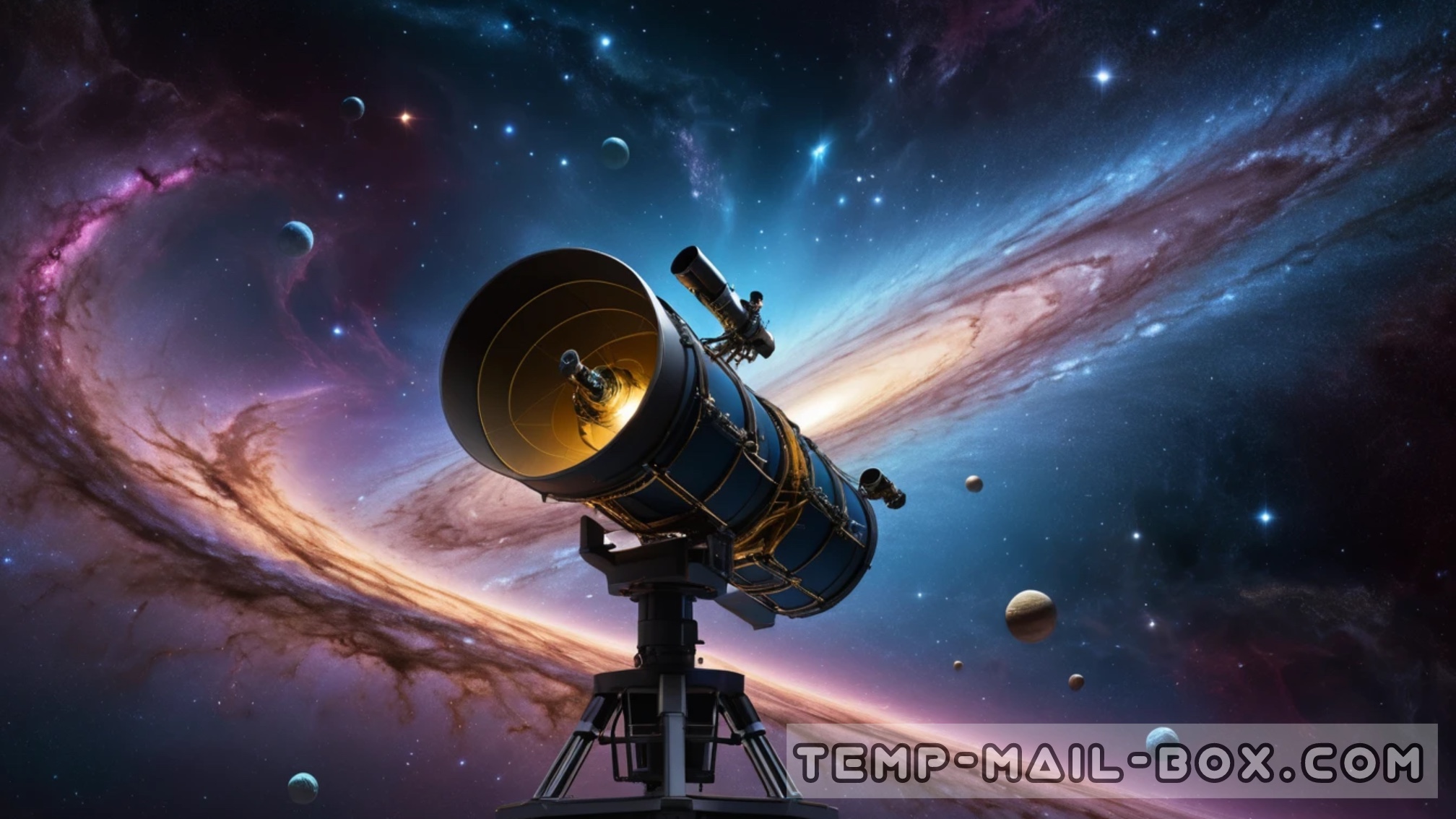
How Space Telescopes See the Universe
Space telescopes have transformed humanity’s view of the universe by allowing scientists to observe the cosmos without the limitations of Earth’s atmosphere. Unlike ground-based observatories, space telescopes operate above clouds, weather, and atmospheric distortion, providing clearer and more precise data about distant stars, galaxies, and cosmic phenomena.
One of the most important advantages of space telescopes is their ability to observe the universe across different wavelengths of light. Human eyes see only a small portion of the electromagnetic spectrum, known as visible light. Space telescopes, however, can detect infrared, ultraviolet, X-rays, and gamma rays. Each wavelength reveals unique information about the universe, from the birth of stars to the behavior of black holes.
Infrared space telescopes are especially powerful for studying regions hidden by cosmic dust. Many star-forming areas are obscured in visible light, but infrared wavelengths pass through dust clouds, allowing astronomers to observe the early stages of stellar and planetary formation. This capability has deepened our understanding of how solar systems like our own come into existence.
Ultraviolet and X-ray telescopes focus on high-energy processes in the universe. They capture radiation emitted by extremely hot objects such as neutron stars, supernova remnants, and active galactic nuclei. Observing these energetic events helps scientists study extreme physics that cannot be replicated in laboratories on Earth.
Another key feature of space telescopes is their long-term stability. Orbiting Earth or positioned far from it, these observatories can continuously monitor the same regions of space for years. This allows astronomers to track changes over time, such as the movement of galaxies, variations in stellar brightness, or the expansion of the universe itself.
Space telescopes also rely on advanced imaging and data processing techniques. Raw data collected by sensors is transformed into detailed images through complex calibration and analysis. Colors are often assigned artificially to represent different wavelengths, helping scientists and the public visualize invisible aspects of the cosmos.
By combining data from multiple space telescopes operating at different wavelengths, astronomers can create a more complete picture of the universe. This multi-wavelength approach reveals how matter, energy, and gravity interact across vast cosmic scales.
Ultimately, space telescopes do more than capture beautiful images. They act as time machines, looking billions of years into the past, and as scientific tools that test theories about the origin, structure, and fate of the universe. Through them, humanity continues to expand its cosmic perspective and uncover the hidden workings of space.