Point Nemo: The Ocean’s Most Remote Spot
Point Nemo, often called the “oceanic pole of inaccessibility,” is the most remote location in the world’s oceans. Situated in the South Pacific Ocean, it is the farthest point on Earth from any landmass. To stand above it—though no solid ground exists there—is to be as isolated as possible on our planet. The name “Nemo,” inspired by the famous submarine captain from Jules Verne’s Twenty Thousand Leagues Under the Sea, captures both the mystery and the desolation of this unique place.
Geographically, Point Nemo is located at approximately 48°52.6′S latitude and 123°23.6′W longitude. The nearest land masses are tiny and uninhabited: Ducie Island to the north (part of the Pitcairn Islands), Motu Nui near Easter Island to the northeast, and Maher Island off the coast of Antarctica to the south. Each of these is more than 2,600 kilometers away. To put this distance into perspective, the astronauts orbiting aboard the International Space Station are sometimes physically closer to Point Nemo than any human on Earth.
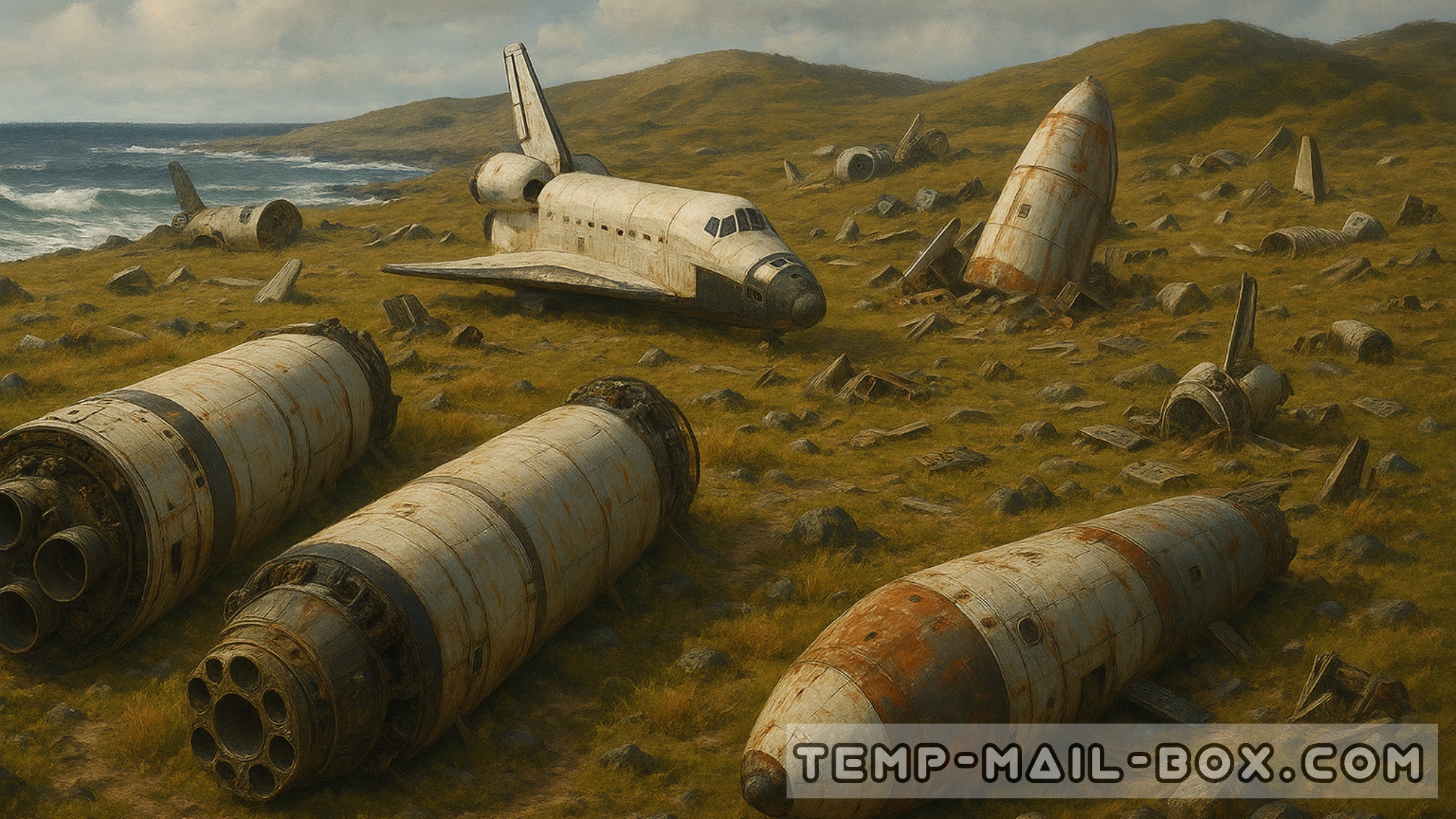
This remote region of the South Pacific is not just a geographic curiosity; it plays a significant role in modern space exploration. Because it is so far removed from populated areas, Point Nemo is used as a “spacecraft cemetery.” Decommissioned satellites, space stations, and other orbital debris are directed to re-enter Earth’s atmosphere and crash into the ocean here. More than 250 spacecraft, including the Russian Mir space station, have found their final resting place in the waters around Point Nemo.
The waters near Point Nemo are part of the South Pacific Gyre, one of the most lifeless parts of the ocean. With limited nutrient input and minimal currents bringing life-sustaining elements, the area has very low biodiversity. For this reason, it has been referred to as an “ocean desert.” Few ships pass through this isolated zone, and scientific expeditions are rare, making it one of the least studied parts of the world’s oceans.
Yet, despite its remoteness, Point Nemo has captured the imagination of scientists, adventurers, and storytellers alike. Some speculate about what secrets may lie hidden in its depths, while others simply marvel at the idea that such a place exists at all. It represents the ultimate definition of isolation, a reminder of both the vastness of our planet and the fragility of our human presence upon it.
In essence, Point Nemo is more than a set of coordinates—it is a symbol of exploration, space history, and the untouched wilderness of the ocean. It reminds us that even in the age of satellites and global communication, there are still places on Earth where human presence is fleeting and the natural world reigns undisturbed.