The Tunguska Event: A Mysterious Cosmic Explosion
On the morning of June 30, 1908, a massive explosion shook the remote Siberian wilderness near the Tunguska River. The blast flattened approximately 2,000 square kilometers of forest, toppling an estimated 80 million trees. The event, known as the Tunguska explosion, remains one of the most mysterious cosmic phenomena in recorded history.
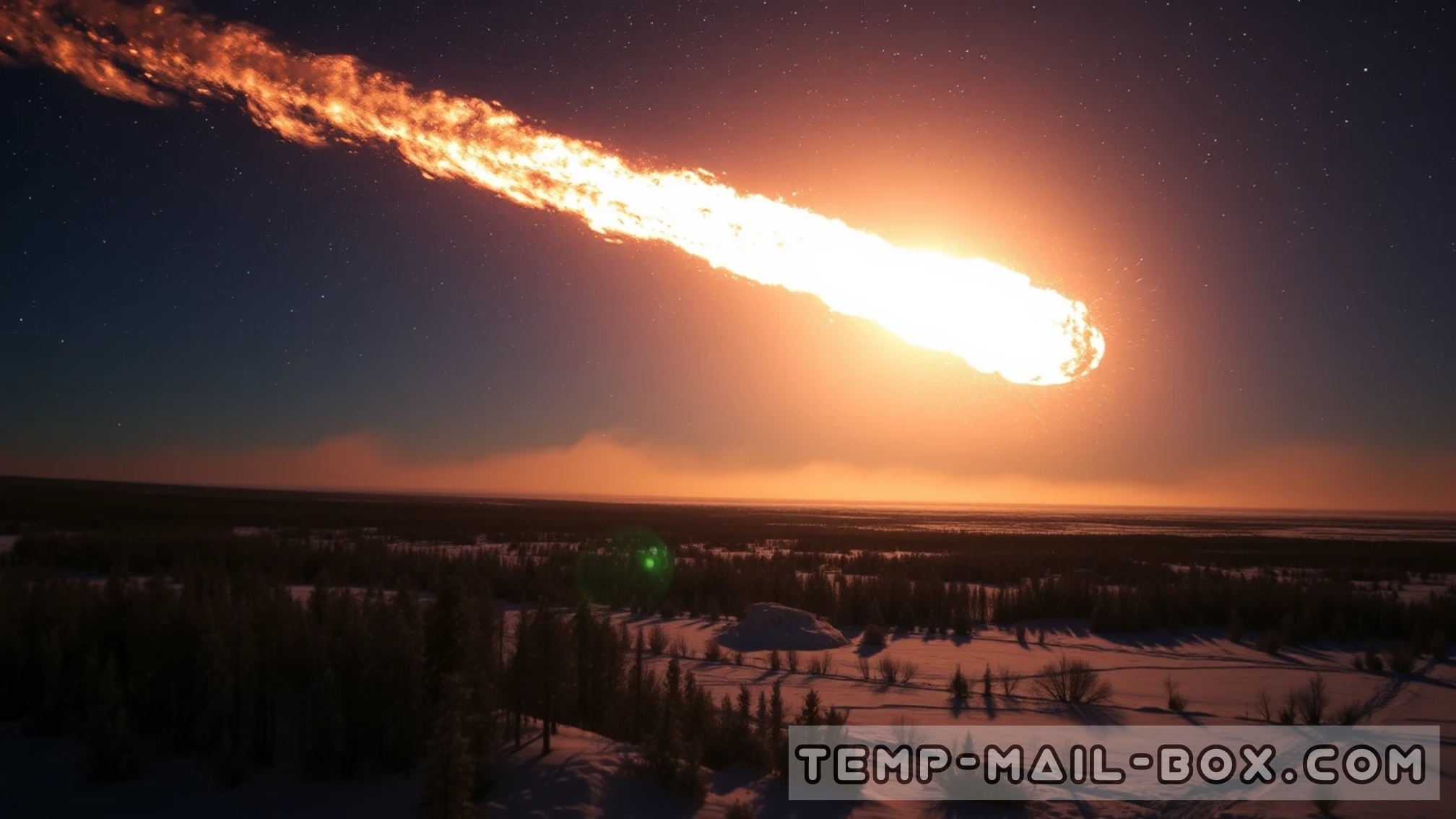
Eyewitnesses described seeing a bright fireball streak across the sky before an intense flash of light and a powerful shockwave sent tremors through the ground. The explosion’s force was estimated to be between 10 to 15 megatons of TNT, comparable to a modern nuclear bomb. Despite its immense power, no impact crater was found, leading to decades of speculation and scientific investigation.
Most researchers agree that the Tunguska event was caused by an airburst—an explosion of an asteroid or comet fragment in the atmosphere. The object, likely measuring between 50 to 60 meters in diameter, disintegrated at an altitude of 5 to 10 kilometers, releasing its energy in a devastating shockwave. This theory explains the lack of a visible crater and the widespread radial pattern of the flattened trees.
One of the earliest expeditions to investigate the site was led by Soviet scientist Leonid Kulik in 1927. His team found no solid meteorite fragments but documented the enormous destruction. Since then, numerous expeditions and studies have attempted to uncover more details about the event, analyzing tree rings, soil samples, and atmospheric records.
Alternative theories have emerged over the years, ranging from a volcanic eruption to an underground gas explosion, but none have been as widely accepted as the asteroid airburst hypothesis. Some even speculate that the explosion resulted from an encounter with extraterrestrial technology, though there is no scientific evidence to support such claims.
The Tunguska event serves as a stark reminder of the potential threats posed by near-Earth objects. If such an explosion were to occur over a populated area today, the consequences would be catastrophic. Scientists continue to monitor asteroids and develop planetary defense strategies to mitigate future impacts.
Despite over a century of research, many aspects of the Tunguska event remain enigmatic. Was it a fragment of a comet or an asteroid? Could there be undiscovered clues buried beneath the Siberian wilderness? As technology advances, future studies may finally unravel the full mystery behind one of Earth’s greatest unexplained explosions.