
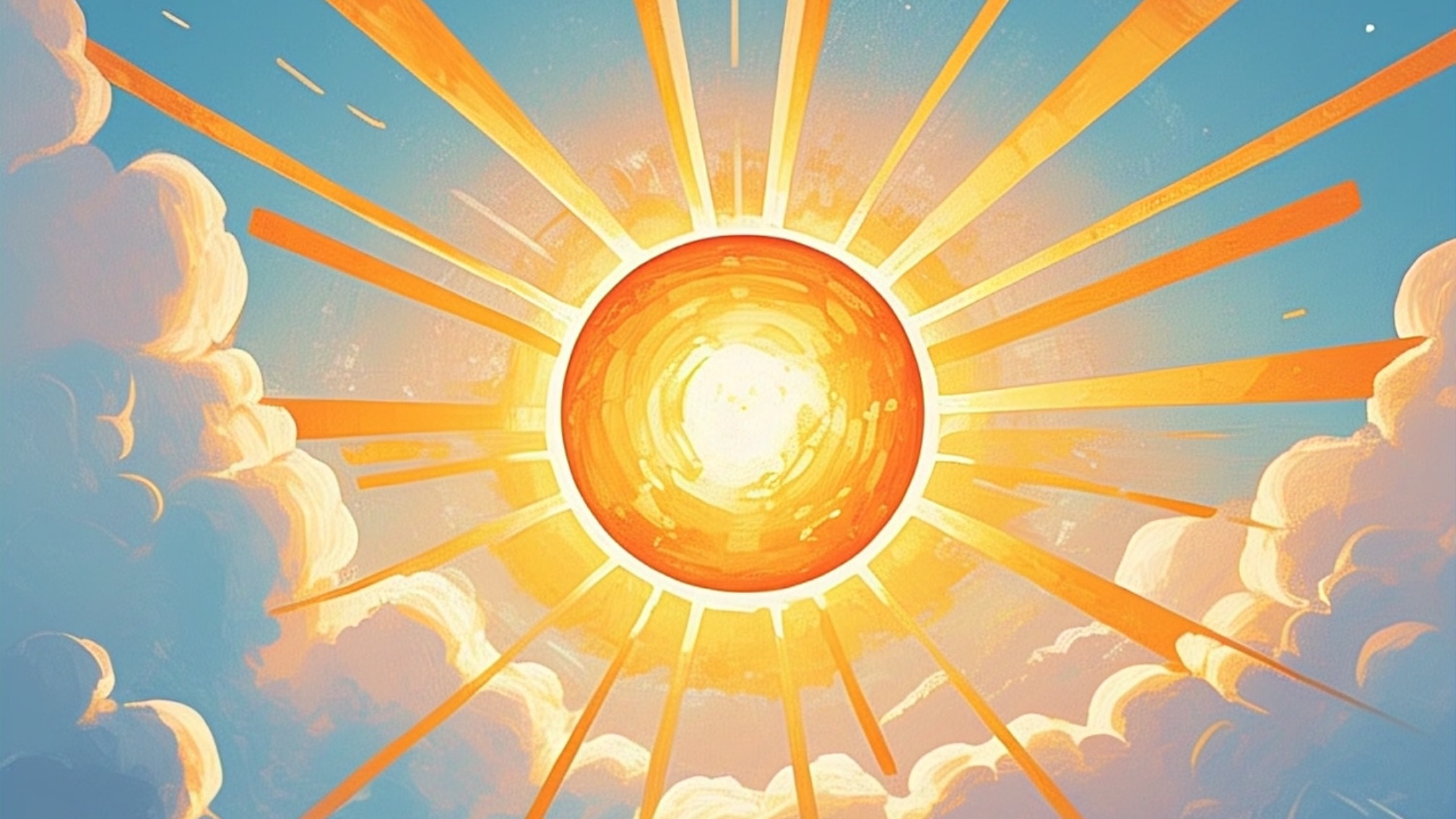
The Sun: A 4.6 Billion-Year History of Our Star
The Sun, the center of our solar system, has been shining for approximately 4.6 billion years. Its history is a fascinating tale of nuclear reactions, gravitational forces, and celestial evolution.
_Formation and Early Years_
The Sun was born from a giant cloud of gas and dust called the solar nebula. As the nebula collapsed under its own gravity, the Sun began to take shape. The intense heat and pressure at its core ignited nuclear reactions, marking the birth of our star.
_Main Sequence and Life Cycle_
The Sun has spent about 4.6 billion years on the main sequence, a stage where it fuses hydrogen into helium in its core. This process releases an enormous amount of energy, which we receive as sunlight. As the Sun ages, it will eventually exhaust its hydrogen fuel and expand into a red giant, engulfing the inner planets.
_Structure and Composition_
The Sun consists of about 75% hydrogen and 25% helium by mass. Its core is incredibly hot, with temperatures reaching over 15 million degrees Celsius. The Sun's surface, or photosphere, is about 5,500 degrees Celsius, while its corona, the outer atmosphere, can reach temperatures of up to 2 million degrees Celsius.
_Impact on the Solar System_
The Sun's energy has a profound impact on the solar system. It drives the Earth's climate, weather patterns, and the water cycle. The Sun's radiation also influences the formation of planetary atmospheres and the development of life.
_Interesting Facts_
- The Sun is about 109 times bigger than the Earth.
- The Sun's surface gravity is about 28 times stronger than the Earth's.
- The Sun loses about 1% of its mass every 100 million years due to solar winds.
_Conclusion_
The Sun's history is a testament to the awe-inspiring power of celestial evolution. Its energy has shaped our solar system, and its impact on our planet is undeniable. As we continue to study the Sun, we gain a deeper appreciation for the intricate dance of gravity, nuclear reactions, and radiation that sustains life on Earth.