
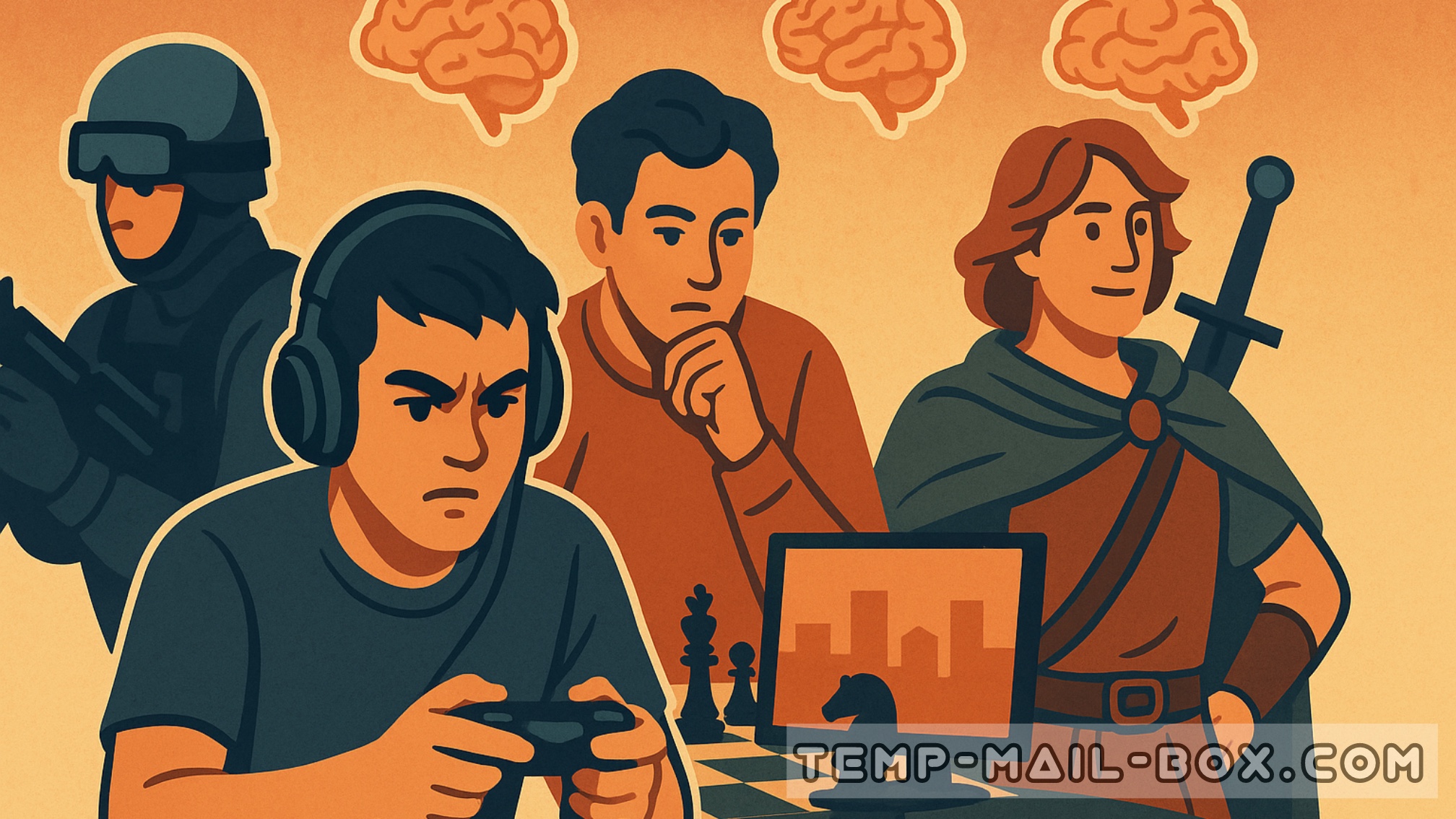
To Play or Not to Play? How Game Genres Shape Your Brain
Video games have moved far beyond simple entertainment. Today, they are powerful digital environments that can develop memory, attention, reaction speed, planning skills, and even emotional resilience. But not all games influence the brain in the same way. The genre you choose determines which cognitive functions grow stronger — and which remain untouched.
Action games, for example, challenge your reaction speed and decision-making under pressure. Fast-paced shooters and action-adventures require the brain to process visual information rapidly, track multiple objects at once, and respond instantly. Studies show that players of action games often develop improved reflexes, sharper focus, and faster information processing.
Strategy games, on the other hand, train entirely different mental abilities. Whether it’s a real-time strategy or a turn-based tactical game, these genres stimulate planning, long-term thinking, and complex problem-solving. They force the player to analyze resources, predict outcomes, and adapt their strategy when conditions change — almost like running a mental gym for critical thinking.
Puzzle games offer yet another type of cognitive workout. From matching patterns to solving logic problems, puzzle mechanics strengthen memory, spatial thinking, and concentration. These games engage the brain’s executive functions, which are responsible for controlling attention, organizing tasks, and maintaining mental discipline.
Role-playing games (RPGs) go deeper into emotional and narrative engagement. They develop empathy, imagination, and decision-making based on values rather than reflexes. Because RPGs require players to manage relationships, choose dialogue options, and understand motives, they enhance social cognition — the brain’s ability to read emotions and intentions.
Simulation games expand the mind in a more practical direction. City-builders, business simulators, and management games help players understand systems, balance budgets, and manage complex processes. They train analytical thinking and promote a structured view of the world.
Despite their differences, all game genres share one important trait: they activate neuroplasticity — the brain’s ability to adapt and form new neural connections. When you choose what to play, you are, in a sense, choosing what part of your brain you want to train. Therefore, the key is balance. A mix of genres can create a more diverse cognitive impact, ensuring broad mental growth rather than specialization in a single area.
So, should you play? The answer is yes — but intentionally. Select games that help you grow in the direction you value most. Whether you want to think faster, plan better, focus deeper, or empathize more sincerely, there is a genre that can support that journey.