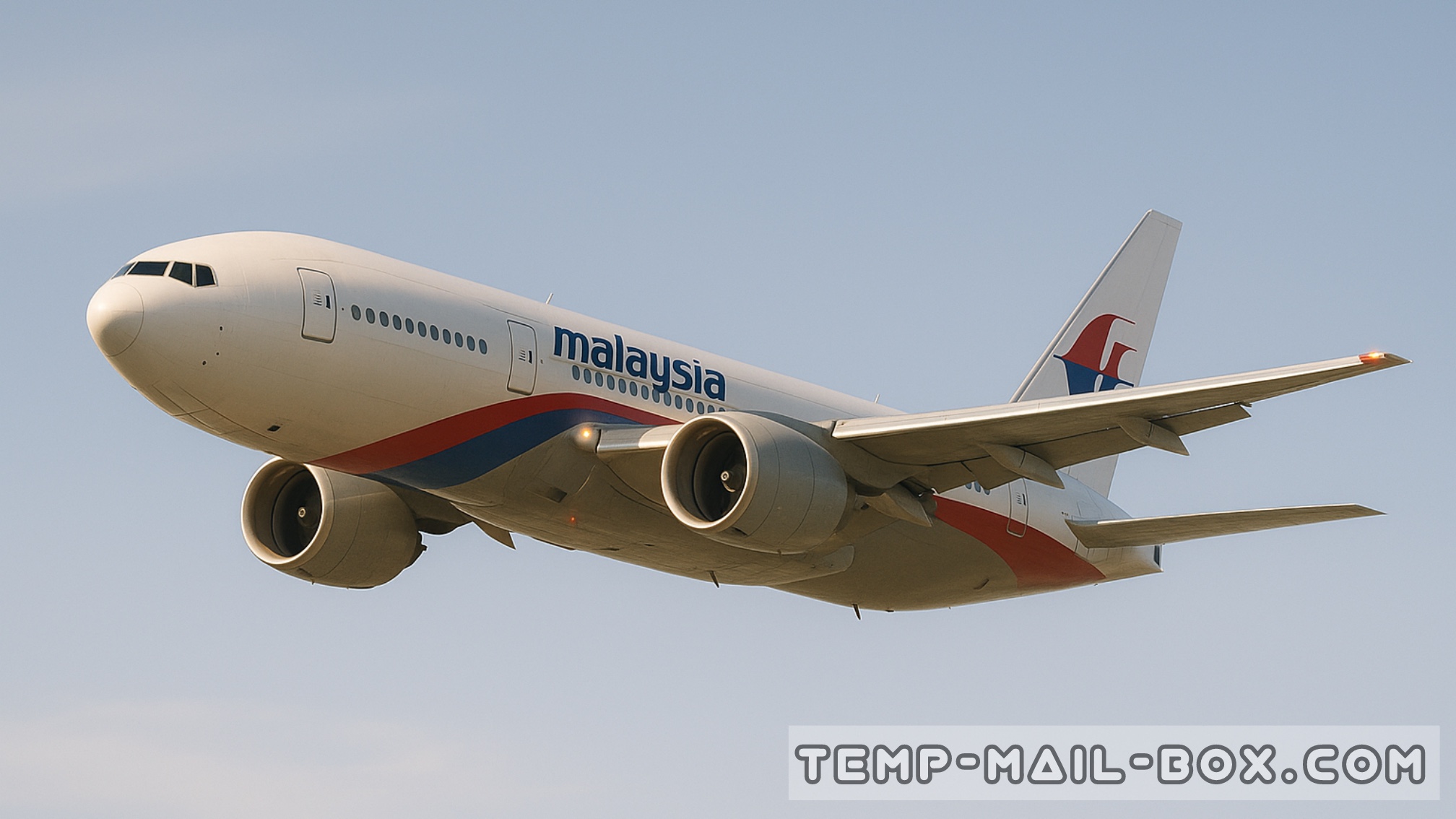
The Mystery of Flight MH370: Aviation’s Greatest Enigma
On March 8, 2014, Malaysia Airlines Flight MH370 vanished from radar screens during a routine journey from Kuala Lumpur to Beijing. With 239 people aboard—a mix of passengers and crew—the disappearance triggered one of the most extensive and perplexing aviation investigations in history. More than a decade later, the mystery remains unsolved, fueling global intrigue, conspiracy theories, and technological changes in air travel tracking.
The Flight That Never Arrived
Flight MH370, a Boeing 777-200ER, took off from Kuala Lumpur International Airport at 00:41 local time. Approximately 40 minutes into the flight, contact with air traffic control was lost. Instead of continuing on its scheduled path across the South China Sea, military radar later revealed that the aircraft had turned sharply westward, flew across the Malay Peninsula, and then out into the Indian Ocean.
No distress signal was ever sent. The last known satellite “handshake” between the aircraft and an Inmarsat satellite system occurred around 8:11 a.m.—nearly seven hours after takeoff—suggesting the plane flew until its fuel was exhausted.
The Global Search Effort
The disappearance sparked a multinational search operation involving more than 26 countries. Initial searches focused on the South China Sea, but later satellite data shifted attention to the southern Indian Ocean. Massive underwater search missions, led by Australia, covered more than 120,000 square kilometers of seabed but failed to locate the wreckage.
Some debris confirmed to be from MH370 was eventually found on remote shores: a flaperon on Réunion Island in 2015, and parts of the wing and interior panels on coastlines of Mozambique, Tanzania, and Madagascar. However, the main wreckage remains undiscovered.
Theories and Speculation
The lack of concrete evidence has given rise to a wide range of theories:
• Mechanical failure or fire: Possible but unlikely without a distress call.
• Pilot suicide: Investigators considered whether the captain deliberately diverted the plane.
• Hijacking or cyber attack: Some believe the plane was taken over intentionally.
• Military intervention or cover-up: These remain unproven and largely speculative.
The official investigation, led by Malaysia with help from Australia and China, concluded in 2018 without identifying a definitive cause.
Legacy and Impact
Flight MH370 has had a profound impact on aviation safety and technology:
• Aircraft are now required to transmit their location every 15 minutes (even more frequently in distress).
• Tracking via satellites has become more robust.
• The tragedy emphasized the need for better international cooperation during aviation emergencies.
Most importantly, MH370 represents the pain of unanswered questions. Families of the victims continue to demand answers, truth, and closure. The story of MH370 is not just about a lost plane—it’s about the limits of our understanding and the enduring human need to find meaning in tragedy.