
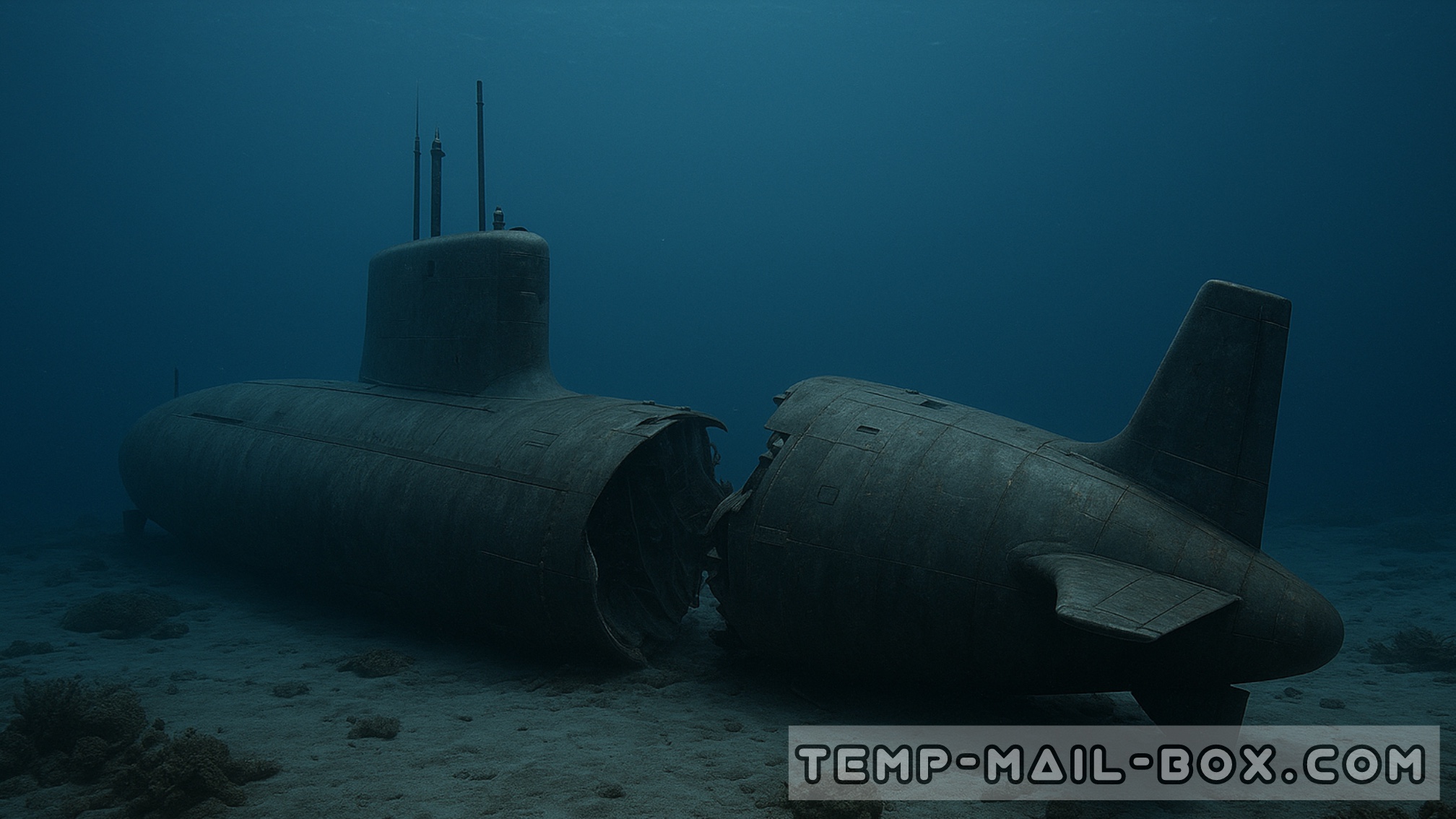
The Secret Submarine Salvage: Project Azorian
During the height of the Cold War, a clandestine U.S. mission took place beneath the waves of the Pacific Ocean. This operation, shrouded in secrecy for decades, was one of the most audacious intelligence undertakings in modern history. It was called Project Azorian — a covert attempt by the CIA to recover a sunken Soviet nuclear submarine from the ocean floor.
The Mysterious Sinking of K-129
In March 1968, the Soviet ballistic missile submarine K-129 sank mysteriously about 1,500 miles northwest of Hawaii, with all 98 crew members aboard. The cause of the sinking remains debated, with theories ranging from internal malfunction to collision with a U.S. sub. However, what made the incident extraordinary was the fact that the submarine was carrying nuclear missiles and cryptographic equipment.
The Soviet Navy failed to locate the wreck. But the U.S., using advanced sonar and underwater surveillance, eventually pinpointed its location — over 5,000 meters (16,500 feet) deep, far beyond typical recovery capabilities.
The CIA’s Ambitious Plan
Realizing the intelligence value of the sunken sub — including possible access to Soviet codes, weapons systems, and nuclear technology — the CIA developed an elaborate plan to secretly retrieve it. This became Project Azorian, launched in collaboration with private contractor Global Marine Development.
To avoid Soviet suspicion, the U.S. needed a credible cover story. Enter Howard Hughes, the eccentric billionaire. Publicly, Hughes announced that his company was building a massive ship, the Hughes Glomar Explorer, to mine valuable manganese nodules from the ocean floor. In reality, the vessel was designed as a deep-sea recovery platform equipped with a giant mechanical claw known as the “capture vehicle.”
The Recovery Attempt
In the summer of 1974, the Glomar Explorer set out on its mission. Using cutting-edge underwater technology, it reached the site of the K-129 wreck and began the recovery operation. The mechanical claw was lowered into the abyss, grasping the submarine and slowly lifting it toward the surface.
However, disaster struck during the ascent. Part of the sub broke off and fell back to the ocean floor. Only a portion of the vessel was successfully retrieved — possibly including missile components, codebooks, and the bodies of six Soviet sailors. The CIA reportedly gave the sailors a respectful burial at sea, footage of which was later declassified.
Glomar Denial and Lasting Legacy
The mission remained classified for years. When journalists began probing in the mid-1970s, the U.S. government issued the now-famous “Glomar response” — “We can neither confirm nor deny…” This phrase has since become a standard response in national security cases.
Though the full success of the operation is still debated, Project Azorian remains a legendary example of Cold War espionage, engineering ingenuity, and geopolitical daring. It marked a turning point in undersea operations and demonstrated the extreme lengths to which nations would go to gain a strategic edge.
Even today, many details of the mission remain classified — a reminder that beneath the surface of history, secrets still lie buried.