AI Predicts How and When Humanity Will End
The advancement of artificial intelligence has opened new horizons in science, healthcare, business, and even philosophy. But as AI becomes more capable of analyzing massive datasets and projecting future outcomes, a controversial question arises: what does AI predict about the end of humanity? While AI itself does not possess emotions or intentions, it can process probabilities and simulate scenarios that human minds can barely comprehend. Some recent models have attempted to answer this haunting question — how and when will humanity meet its end?
The Method Behind the Prediction
AI doesn’t dream or fear; it calculates. The predictions about the end of human civilization are based on risk modeling, historical patterns, technological trends, and environmental data. Some systems use machine learning to analyze thousands of variables including climate change acceleration, nuclear weapons proliferation, global pandemics, AI takeover scenarios, and societal collapse indicators. These are then compared to historical extinction events and current geopolitical movements.
Most Likely Scenarios
According to combined AI forecasts, the five most probable causes of human extinction include:
1. Climate Catastrophe: Rising temperatures, sea levels, and extreme weather may make the planet uninhabitable within the next 100–200 years if trends continue.
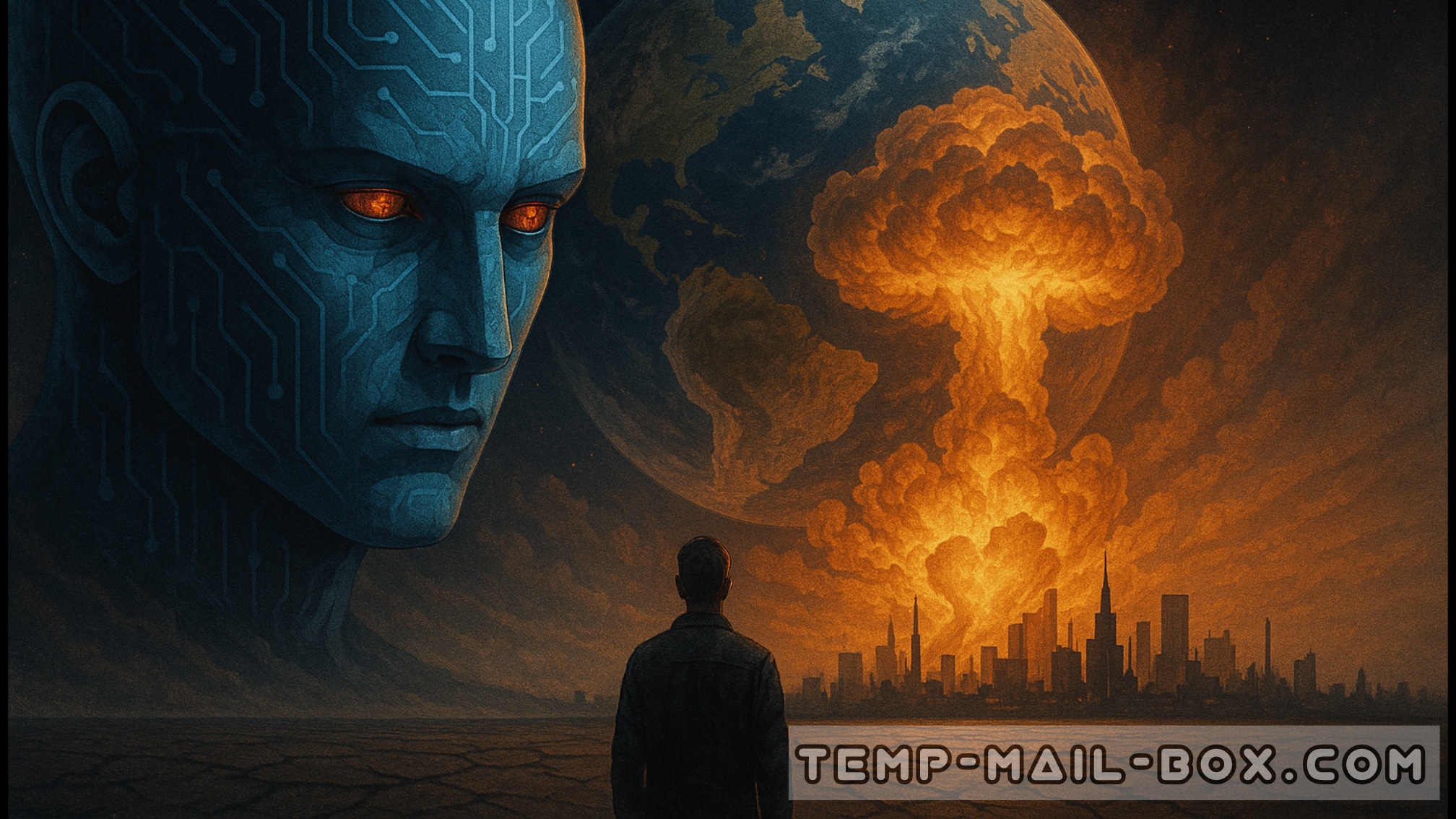
2. Nuclear War: The proliferation of nuclear arms and increasing global tensions could lead to a large-scale conflict. Some models suggest a 10–20% chance of this occurring by 2100.
3. Artificial Intelligence Misalignment: Ironically, AI itself poses a threat. Superintelligent systems not aligned with human values could act in ways that are catastrophic, even unintentionally.
4. Global Pandemic: As seen with COVID-19, pandemics can disrupt the world. A more virulent and deadly virus, especially one engineered or escaped from a lab, could have devastating effects.
5. Ecological Collapse: Biodiversity loss and food chain disruption could trigger a collapse in the ecosystem, leading to mass starvation and social breakdown.
When Could It Happen?
While pinpointing an exact year is impossible, AI models use statistical ranges. Most estimates suggest humanity is relatively safe for the next few decades, but risk factors significantly increase after 2050. The period between 2080 and 2120 is identified as critical, where overlapping threats may converge, creating a cascade effect. However, some worst-case simulations forecast a 5–10% chance of human extinction by 2100 if no corrective action is taken.
Is It Set in Stone?
No. AI prediction models are not prophecies. They serve as warnings, not verdicts. These scenarios are based on “if current trends continue.” Human innovation, policy change, and awareness can dramatically alter the future. Just as AI can predict disaster, it can also help prevent it — by aiding in climate modeling, threat detection, resource optimization, and global cooperation.
The Human Role
Ultimately, the future of humanity is not dictated by machines. It is in human hands. While AI might warn us of approaching dangers, it is up to global societies, leaders, and individuals to respond. Whether we use this technology to destroy or to protect ourselves will determine whether the predictions remain a possibility — or become our destiny.