Global Shifts: Key Events Shaping the World Today
In today’s interconnected world, events in one region can ripple across continents within hours. As of late August 2025, several significant developments are reshaping geopolitics, economies, and global societies. Here’s an overview of the most influential current events and why they matter.
1. Geopolitical Tensions and Power Realignments
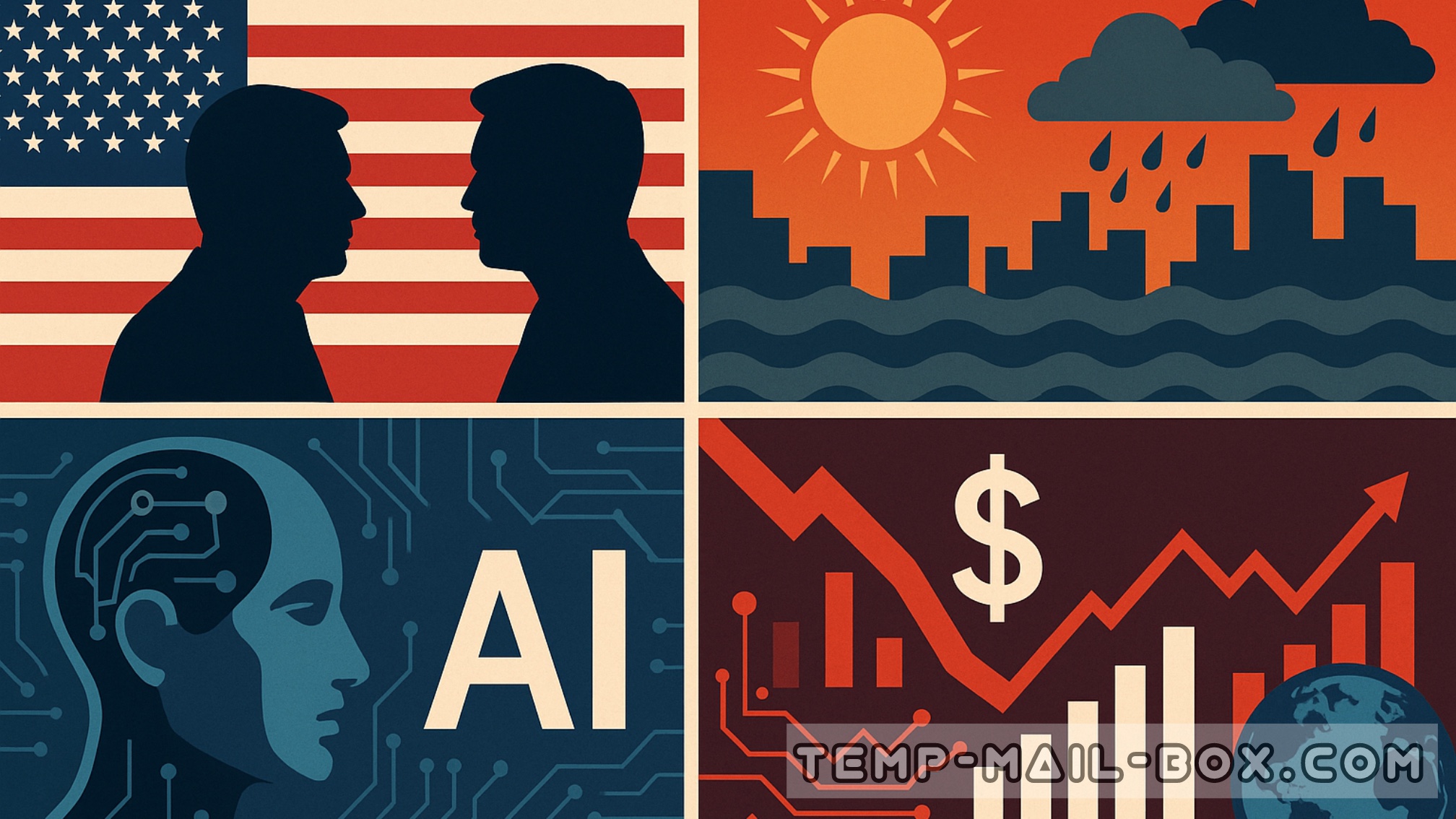
One of the defining themes of 2025 continues to be shifting global alliances. The ongoing friction between the United States and China remains central, now further complicated by emerging coalitions in Southeast Asia and the Global South. Countries like India, Brazil, and South Africa are asserting more influence in international platforms such as BRICS+, creating a multipolar balance that challenges the West’s historical dominance.
In Europe, Ukraine remains a hotspot. While large-scale military conflict has decreased compared to 2022–2023, sporadic escalations and strategic drone strikes have kept tensions high. NATO continues to provide economic and tactical support, while Russia engages in cyber operations and regional power plays.
2. Climate Extremes Causing Global Disruptions
This year has already broken several climate records. Heatwaves across Southern Europe, the Middle East, and parts of the U.S. have strained power grids and caused thousands of heat-related illnesses. Meanwhile, flash floods in Pakistan, India, and Japan have displaced millions and reignited urgent debates around urban infrastructure and disaster preparedness.
The El Niño weather pattern, which intensified in early 2025, is disrupting agricultural outputs across Latin America and parts of Africa. Global food prices are rising again, reversing some of the stabilization seen in late 2024.
3. Global Economic Uncertainty
Although inflation has cooled in major economies like the U.S., UK, and Germany, uncertainties persist. Central banks are treading carefully with interest rates, trying to avoid recession while containing lingering price pressures. Supply chain disruptions—especially in electronics and rare earth materials—are contributing to market volatility.
In China, slower-than-expected recovery post-pandemic is causing concern among investors. Real estate defaults and high youth unemployment are creating social strain, with global consequences for commodities and trade.
Cryptocurrencies are experiencing a moderate rebound in 2025, but they remain under regulatory scrutiny. The European Union is finalizing its digital asset framework, while the U.S. continues debating federal-level crypto policies.
4. Artificial Intelligence and Tech Regulation
Generative AI, once hailed as a pure productivity tool, is now at the center of ethical, legal, and creative debates. In July, the United Nations convened a special session to begin drafting a global AI ethics agreement. Major tech companies, including OpenAI, Google DeepMind, and Alibaba AI, have agreed to baseline transparency standards, but concerns about bias, misinformation, and mass surveillance persist.
Meanwhile, the EU’s AI Act—scheduled for final implementation in early 2026—is being watched globally as a template for comprehensive regulation. In the U.S., several states have introduced their own AI legislation, creating a fragmented legal landscape.
5. Cultural and Social Shifts
Globally, people are more engaged than ever with issues of identity, justice, and representation. In Iran, mass protests against digital censorship and economic mismanagement have reignited civil movements, despite government crackdowns. In the U.S., the Supreme Court's recent decisions on reproductive rights and tech monopolies have sparked nationwide debates and demonstrations.
On the cultural front, the rise of regional film industries—from Nollywood to Indian Telugu cinema—continues to challenge Hollywood’s dominance. Streaming services are doubling down on local content, and global music charts are now more diverse than ever.
Conclusion
From rising temperatures to realigning powers, the world is in flux. While uncertainty often fuels fear, it also opens pathways for cooperation, innovation, and meaningful change. Understanding current global events isn’t just about keeping up with headlines—it’s about preparing for a future that demands adaptability, awareness, and shared responsibility.