Gods of Egypt: The Divine Pantheon
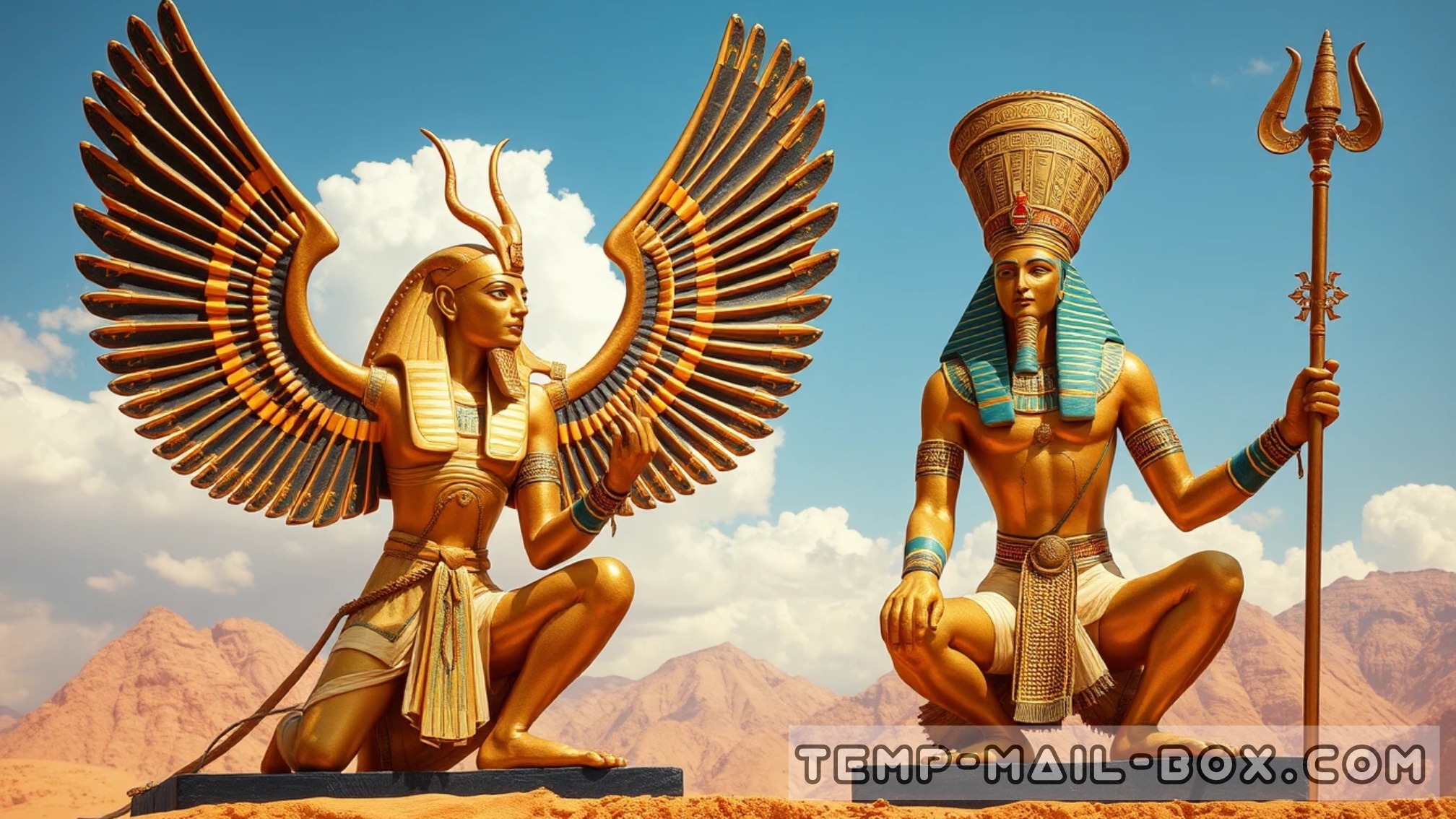
Ancient Egypt was a land rich in mythology, where gods and goddesses played a crucial role in the lives of its people. The Egyptian pantheon consisted of numerous deities, each representing different aspects of nature, life, and the afterlife. These gods were deeply intertwined with the daily existence of the Egyptians, influencing everything from governance to religious rituals and funerary practices.
One of the most important deities was Ra, the sun god and creator of the universe. Depicted with a falcon’s head and a sun disk, Ra was believed to travel across the sky during the day and journey through the underworld at night, battling the forces of chaos. His role was crucial in maintaining cosmic order, known as Ma’at.
Another prominent god was Osiris, the ruler of the underworld and god of resurrection. Osiris symbolized death, rebirth, and the cycle of nature. According to myth, he was murdered by his jealous brother Seth, only to be resurrected by his wife Isis, who became one of the most revered goddesses in Egyptian mythology. Their son Horus, the falcon-headed god of kingship and the sky, later avenged his father and became a symbol of divine rule.
Anubis, the jackal-headed god, was associated with mummification and guiding souls to the afterlife. He ensured the proper passage of the dead by weighing their hearts against the feather of Ma’at. If the heart was lighter than the feather, the soul was granted access to the afterlife; otherwise, it was devoured by the monstrous Ammit.
Among the most powerful goddesses was Hathor, the goddess of love, music, and motherhood. She was often depicted as a cow or a woman with cow’s ears and was associated with joy and fertility. Sekhmet, on the other hand, was a fierce lion-headed goddess of war and destruction, believed to protect the pharaoh and unleash divine wrath upon enemies.
The Egyptian pantheon was not static; it evolved over time, with gods merging, adapting, or gaining prominence in different dynasties. Some, like Amun, rose to supreme status, becoming Amun-Ra, the king of the gods. Others, like Thoth, the ibis-headed god of wisdom, played a crucial role in recording divine and human affairs.
The influence of these deities extended beyond religious practices; they shaped Egyptian culture, architecture, and even governance. Temples dedicated to them, such as Karnak and Abu Simbel, stand as testaments to their enduring significance.
Even today, the myths of the Egyptian gods continue to captivate people worldwide, inspiring literature, films, and modern interpretations of ancient beliefs. The gods of Egypt, with their rich symbolism and complex relationships, remain a fascinating aspect of one of history’s most enigmatic civilizations.