
Marie Curie’s Belongings Will Remain Radioactive for 1,500 Years
Marie Curie is remembered as one of the most brilliant scientists in human history. Her groundbreaking work in radioactivity earned her two Nobel Prizes — the first person to ever achieve that distinction. But her legacy extends far beyond accolades. In fact, it lingers in a very literal and dangerous form: radiation.
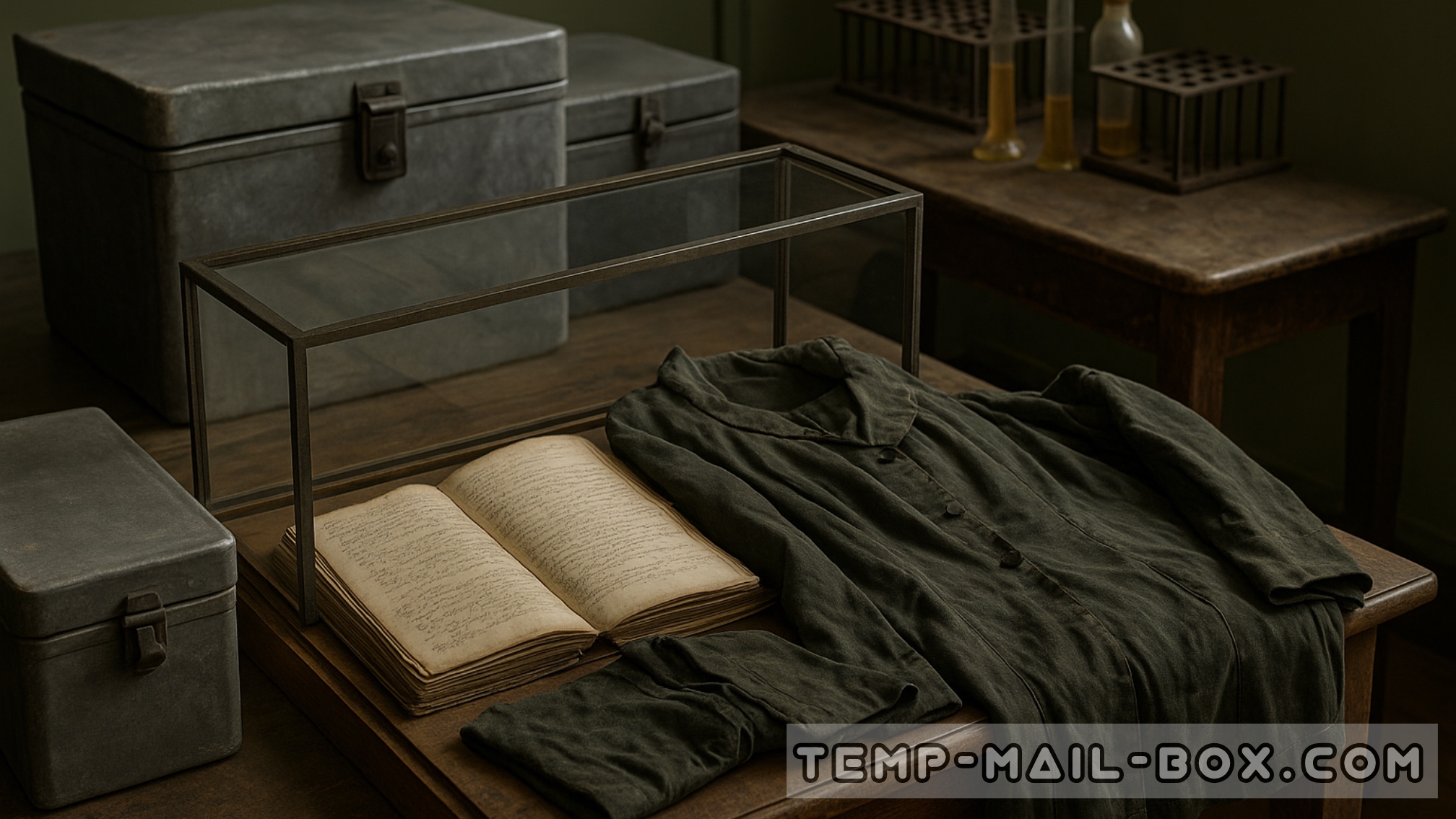
Most people are shocked to learn that many of Marie Curie's personal belongings — including her notebooks, clothing, furniture, and even her kitchen table — are still highly radioactive. So much so that they are stored in lead-lined boxes and cannot be handled without special protective gear. Scientists estimate that it will take another 1,500 years before these items become safe to touch.
This astonishing situation is the result of Curie's pioneering research on radioactive elements, particularly radium and polonium. At the time, the health risks of radiation were unknown. Curie and her husband Pierre handled radioactive substances daily with no protection. She carried test tubes filled with glowing radium in her pockets and kept them in her desk drawers. Curie reportedly even slept with a vial by her bedside because she was so captivated by the mysterious light it emitted.
The long-term effects were tragic. Marie Curie ultimately died of aplastic anemia, a condition linked to prolonged radiation exposure. Her body itself is buried in a lead coffin — a chilling reminder of how radiation follows not just the living, but can linger long after death.
Her scientific notes, which remain crucial for historical research, are kept in the Bibliothèque nationale de France. Anyone wishing to consult them must sign a waiver and wear protective clothing. The level of radioactivity is still high, primarily due to radium-226, which has a half-life of 1,600 years. This means it will take millennia for her belongings to become safe by natural decay.
While this may seem like a terrifying side note to an otherwise inspirational story, it also serves as a powerful testament to the sacrifices made by scientists in the name of progress. Marie Curie’s discoveries laid the foundation for modern physics, cancer treatment, and nuclear energy — but they came at an immense personal cost.
Today, Marie Curie is honored worldwide, not just for her intellect, but also for her courage and endurance. Her radioactive belongings are not just scientific artifacts — they are relics of a time when science was uncharted territory and danger was a price often paid for knowledge.