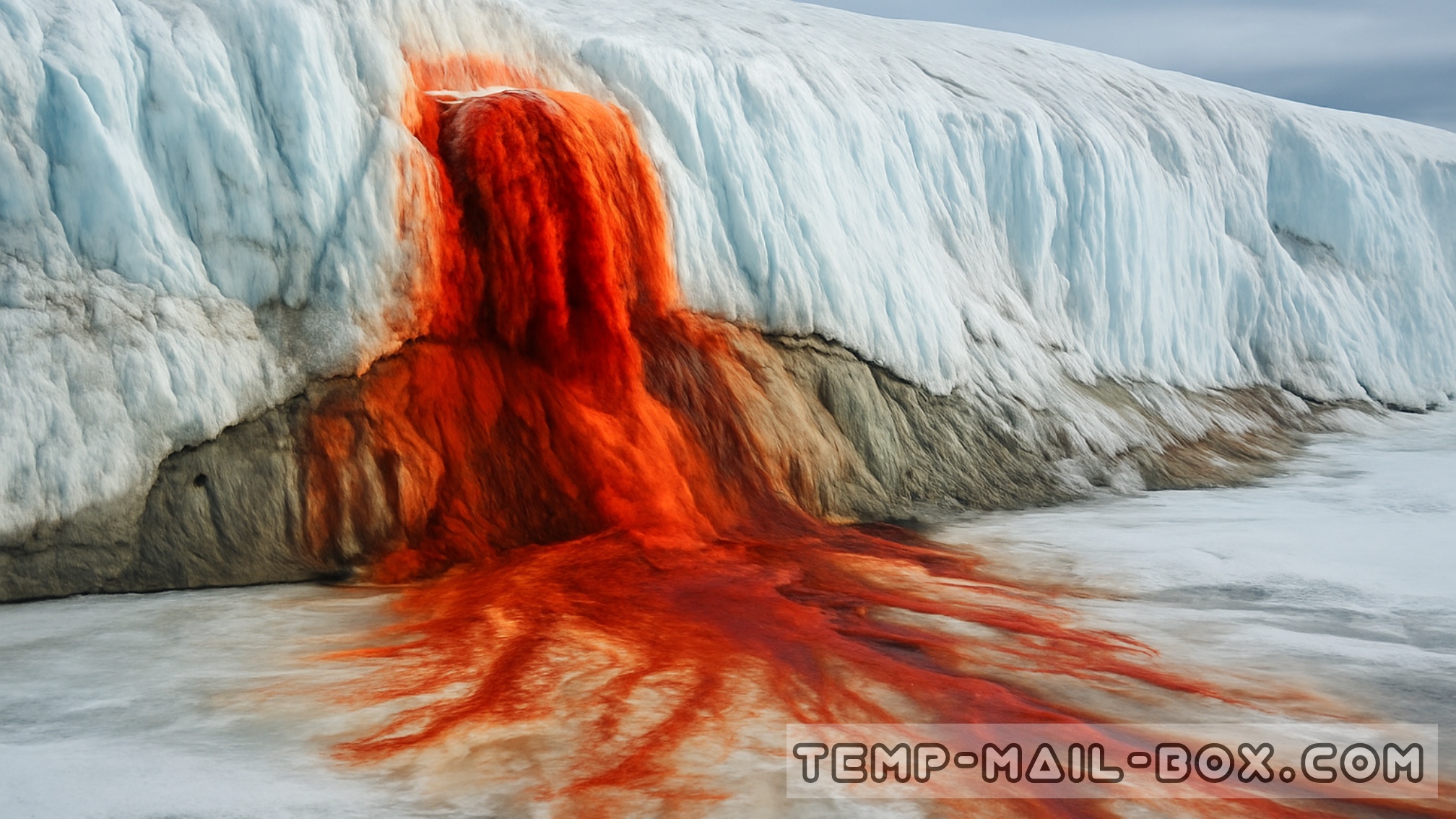
Bloody Waterfall of Antarctica: A Frozen Mystery
Hidden in the vast white expanse of Antarctica, where ice and snow reign supreme, lies one of the most visually arresting natural phenomena on Earth — the Blood Falls. This chilling spectacle looks as though a river of crimson blood is oozing from the Taylor Glacier, spilling out onto the frozen surface of the McMurdo Dry Valleys. For years, it baffled scientists and sparked theories ranging from alien life to supernatural occurrences. But science, as it often does, found answers — and those answers are no less fascinating than the mystery itself.
The Discovery of a Red Wonder
Blood Falls was first discovered in 1911 by Australian geologist Griffith Taylor, who gave his name to the glacier. At the time, the rust-colored outflow of water starkly contrasted with the icy blue and white surroundings, and its origin was a complete mystery. Early speculations attributed the red color to red algae, a not-unusual suspect in strange aquatic colors. However, later analysis proved the real culprit was something more terrestrial yet no less extraordinary.
Why Is It Red?
The vivid red hue comes from iron-rich, hypersaline water trapped beneath the glacier. When this ancient subglacial brine makes its way to the surface, it encounters oxygen for the first time in possibly millions of years. This triggers a process known as oxidation — similar to rusting — which turns the iron in the water a deep red. The result? A waterfall that looks like it's bleeding.
A Hidden Ecosystem
More astonishing than the color itself is what lies beneath the ice. Scientists have discovered that the subglacial reservoir feeding Blood Falls supports a unique microbial ecosystem. These extremophiles — organisms that thrive in extreme environments — survive without sunlight, using iron and sulfate for energy in complete darkness. This makes Blood Falls not just a natural wonder, but a potential analog for life in extraterrestrial environments, such as beneath the ice crusts of Jupiter’s moon Europa or Saturn’s moon Enceladus.
How the Water Flows Through Ice
Another mystery once puzzled glaciologists: how does water flow in an environment where temperatures are well below freezing? The answer lies in the salt content. The brine beneath Taylor Glacier is so salty — over four times saltier than ocean water — that it remains in liquid form even at -7°C (19.4°F). Over time, fissures and small channels allow the pressurized water to push through and erupt from the glacier’s edge.
Why It Matters
Blood Falls isn't just an eerie spectacle. It’s a portal to Earth's ancient past and a living laboratory for astrobiology, microbiology, and glaciology. By studying the microbial life forms here, scientists gain insight into survival strategies under ice — useful knowledge for exploring icy worlds beyond our planet. Moreover, it challenges what we know about where life can exist and how isolated ecosystems evolve over millennia.
Tourism and Accessibility
Despite its fame, Blood Falls is one of the most remote places on the planet. Situated in the McMurdo Dry Valleys — one of the driest and most Mars-like environments on Earth — it’s not accessible to traditional tourists. Only researchers with special permits and logistical support from Antarctic stations can visit the site. However, its striking image continues to fascinate the public through photographs, documentaries, and satellite imagery.
Conclusion
The Blood Falls of Antarctica is a striking example of how our planet still harbors secrets beneath its icy skin. What appears as a gruesome spectacle turns out to be a beautiful reminder of nature's complexity and adaptability. This natural "wound" in the glacier may not be bleeding in the literal sense, but it certainly pours out rich stories from deep time — stories of isolation, endurance, and the astonishing possibilities of life in the most unexpected places.