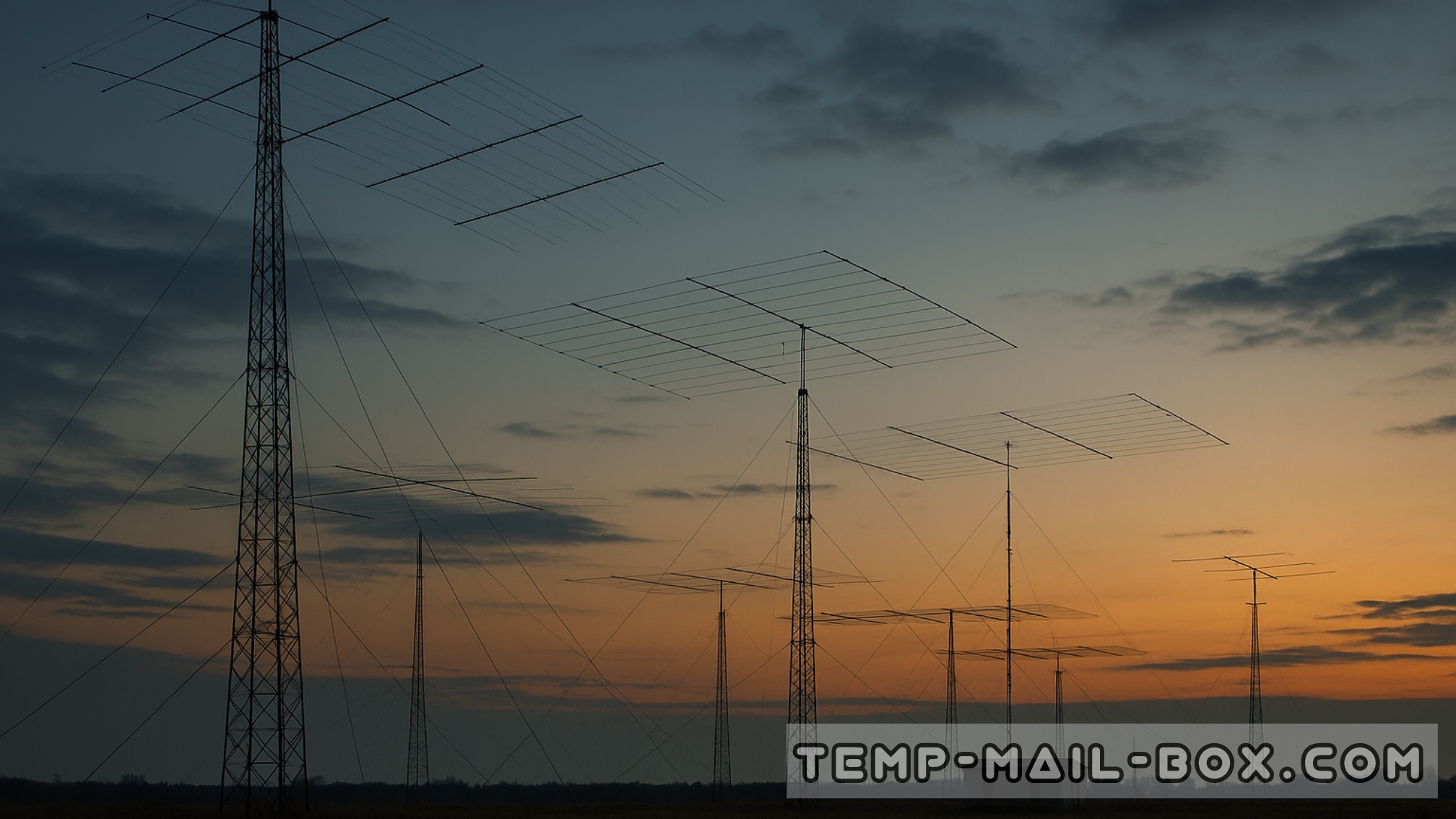
The Mystery of Number Stations
Hidden among the static and hum of shortwave radio frequencies, mysterious broadcasts have been puzzling listeners for decades. These are number stations — strange radio transmissions that often consist of eerie voices reading out long strings of numbers, seemingly without context or meaning. Despite numerous theories and investigations, their true purpose remains shrouded in secrecy.
The phenomenon of number stations dates back to at least World War I, but they became particularly widespread during the Cold War. The broadcasts typically begin with a distinctive introductory tune or signal — a series of beeps, tones, or even nursery rhymes — followed by a voice (usually synthesized or female) reading out groups of numbers or letters. For example: "One-two-nine… Seven-five-three… Zero-zero-eight…" These sequences are often repeated at regular intervals, and can be heard all over the world.
What makes number stations so intriguing is that they are believed to be tools of espionage. Intelligence agencies allegedly use them to send encrypted messages to undercover agents operating in foreign countries. The one-way communication method — with no return signal necessary — makes it nearly impossible to trace the origin or recipient. By using a technique called the "one-time pad" (an unbreakable cipher when used correctly), the messages could remain perfectly secure from interception.
Interestingly, despite numerous international agreements prohibiting the unauthorized use of radio frequencies, number stations continue to exist even today. Enthusiasts and hobbyists still track them, recording their broadcasts and maintaining extensive databases. Some of the most well-known stations have earned nicknames like "The Lincolnshire Poacher," "UVB-76" (aka "The Buzzer"), or "Cherry Ripe." Each has its own signature sound and transmission pattern.
Governments rarely acknowledge their existence. When questioned, officials typically deny involvement or dismiss the transmissions as anomalies. However, in 1998, a Cuban spy case brought the issue into the open. The U.S. government accused five individuals of receiving encrypted messages from Havana via shortwave number stations — a rare moment when the secretive nature of these broadcasts intersected with public legal proceedings.
The persistence of number stations into the 21st century — even in an age of digital encryption and satellite communication — adds to their mystique. Are they remnants of old spy networks still in operation? Decoys meant to confuse and mislead? Or are they something else entirely?
For now, number stations remain one of the most enigmatic legacies of Cold War-era intelligence — an audible whisper from the shadows of global espionage.