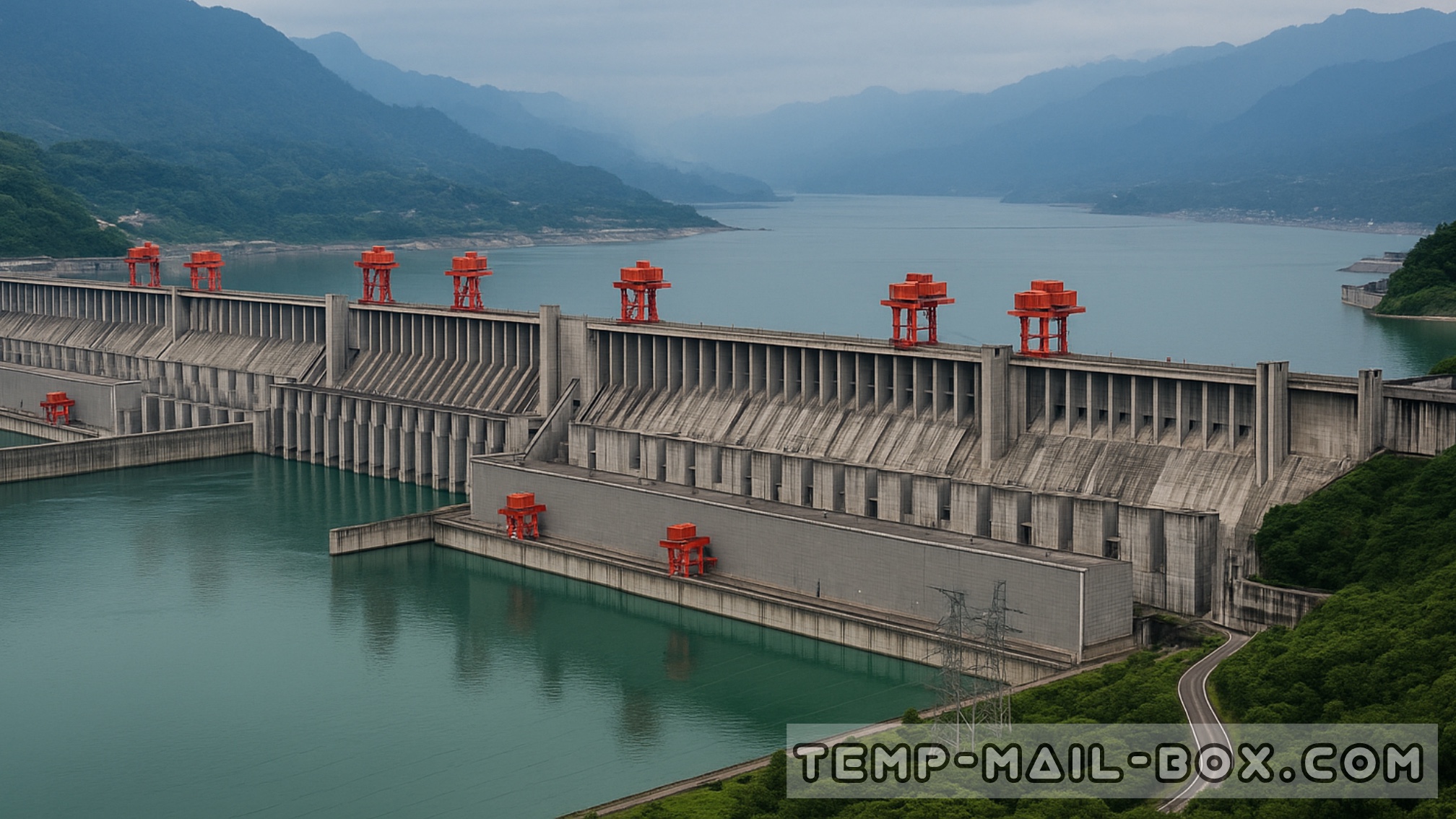
Did China’s Mega Dam Really Slow Down Earth’s Rotation?
When China completed the colossal Three Gorges Dam on the Yangtze River, it wasn’t just a marvel of engineering — it sparked a ripple of global scientific curiosity. Could a man-made structure truly be powerful enough to alter the Earth’s rotation? The short answer: technically yes, but not in the way most headlines suggest.
The Three Gorges Dam is the world’s largest hydroelectric power station by total capacity. It stretches over 2 kilometers and holds back an estimated 39.3 cubic kilometers of water. That’s nearly 10 trillion gallons — enough to flood an entire country the size of the Netherlands to knee depth.
So how does this relate to the Earth’s rotation?
According to NASA scientists, any significant redistribution of Earth’s mass — whether it be glaciers melting, reservoirs filling, or tectonic plates shifting — can influence our planet’s spin. By holding such an immense volume of water, the Three Gorges Dam has slightly shifted Earth’s mass toward the equator. Think of it like a figure skater extending their arms — the spin slows down.
NASA calculated that the dam may have increased the Earth’s moment of inertia, which led to a very small slowing of the planet’s rotation. How small? Approximately 0.06 microseconds per day. That’s 60 nanoseconds — a number so tiny it would take over 45 years to accumulate a one-second difference.
Moreover, the redistribution of water caused a theoretical shift in the Earth’s axis by about 2 centimeters. That’s not enough to create environmental chaos, but it’s a measurable testament to how sensitive our planet’s balance is.
Is this dangerous? Not really. The Earth’s rotation is influenced by many natural phenomena, including tides, earthquakes, and even seasonal wind patterns. The effect from the dam, while real, is minuscule compared to the planet’s natural variability.
So while it’s true that China’s Three Gorges Dam has had a detectable impact on Earth’s rotation, the reality is far less dramatic than sensational headlines suggest. Still, it stands as a powerful example of how human engineering can literally shift the balance of the Earth — even if only slightly.