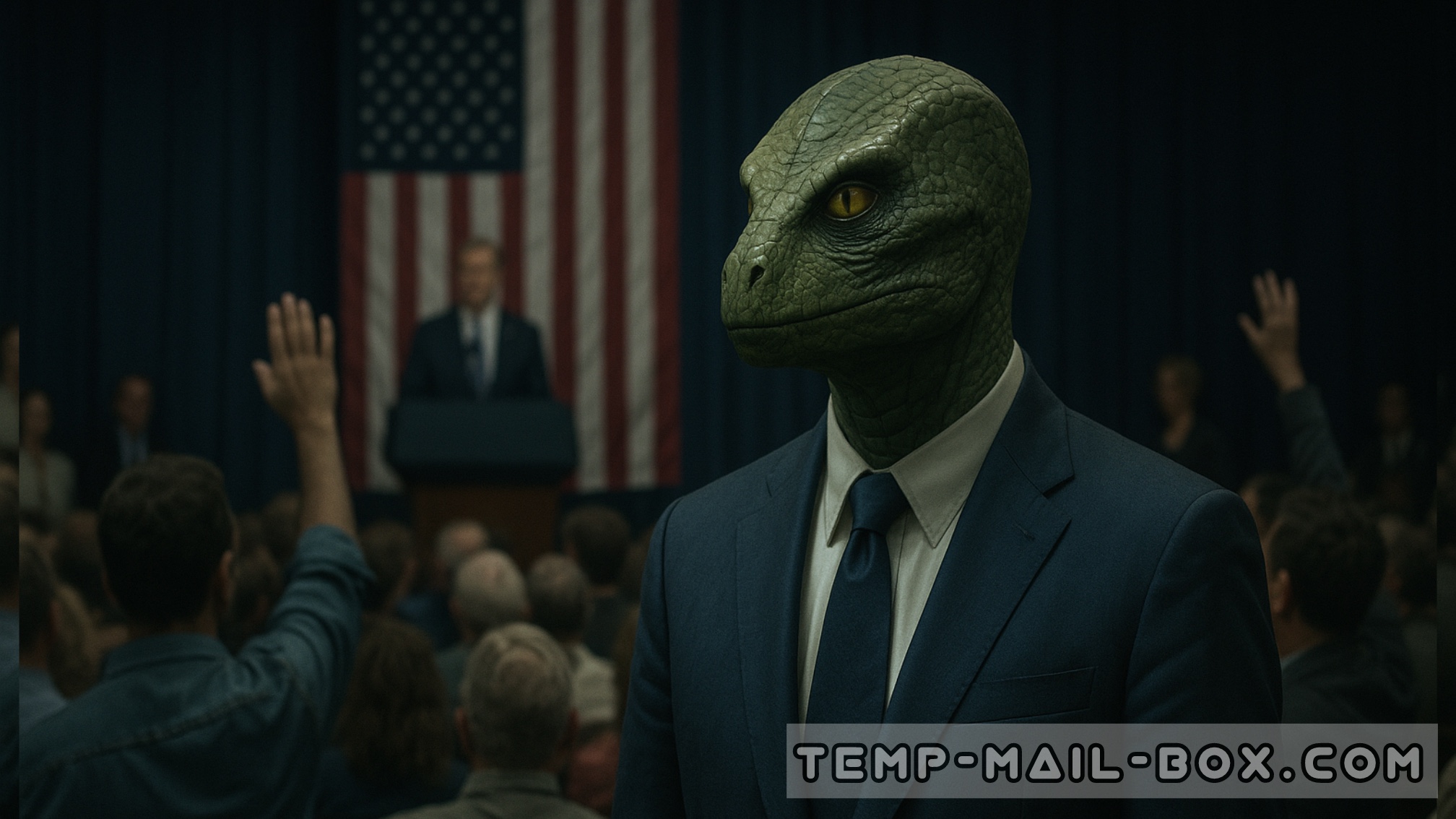
Reptilian Rulers: A Belief Shared by Millions
In 2013, the United States became the stage for a large-scale survey dedicated to public views on conspiracy theories. The results revealed many unusual perspectives, but one particular finding attracted significant attention: approximately 12.5 million Americans expressed the belief that the country is secretly controlled by reptilian beings.
The “reptilian conspiracy” theory suggests that shape-shifting reptile-like creatures, often described as originating from other planets or hidden dimensions, infiltrate governments and powerful organizations to manipulate humanity. Supporters of this theory often claim that political leaders, celebrities, and influential figures are, in fact, disguised reptilians who control world events behind the scenes.
While the idea may sound like a plot from a science fiction film, the numbers show that a noticeable segment of the U.S. population accepts this narrative. For many, such beliefs are tied not only to mistrust in political systems but also to a broader cultural fascination with hidden truths, secret societies, and the possibility of extraterrestrial life.
Sociologists point out that conspiracy theories often gain popularity during times of social tension, economic uncertainty, or rapid technological change. In these periods, people may search for explanations that go beyond the ordinary, creating elaborate scenarios where mysterious forces control everyday life. The reptilian theory, with its vivid imagery and powerful metaphors, fits perfectly into this pattern.
Interestingly, this survey also reflected a wider phenomenon: conspiracy thinking is not restricted to fringe groups. Ideas that once circulated in small communities now spread quickly thanks to the internet and social networks. Online platforms amplify alternative explanations, sometimes blurring the line between entertainment, speculation, and genuine belief.
The fact that millions of Americans accept the possibility of reptilian rulers illustrates the depth of cultural myths in modern society. Whether viewed as a psychological coping mechanism, a form of protest against mainstream narratives, or simply an entertaining fantasy, the reptilian conspiracy remains one of the most striking examples of how imagination and belief intertwine in contemporary culture.